THAIFEX – Anuga Asia 2026 Returns Bigger, Faster, and More Future-Focused


THAIFEX – Anuga Asia has long functioned as one of the region’s most important barometers for the food and beverage industry, but the scale of its 2026 edition signals something more decisive. Returning to IMPACT Muang Thong Thani, Bangkok from 26–30 May 2026, the trade fair expands to 12 halls and more than 140,000 square metres, making this its largest edition to date. At a time when sourcing strategies are becoming increasingly tied to speed, precision, and adaptability, the event arrives not simply as a marketplace, but as a reflection of how the wider industry is recalibrating itself across Asia-Pacific.

This year, THAIFEX – Anuga Asia is expected to gather more than 3,300 exhibitors from over 60 countries and regions, alongside upwards of 88,000 trade visitors representing 140 markets. The scale alone is difficult to ignore, but what makes the event particularly relevant in 2026 is the way it mirrors the broader tensions currently shaping the global food landscape. Functional products continue to gain traction, consumer spending is becoming more selective, and supply chains remain in a state of ongoing adjustment. In practical terms, that means buyers are working with narrower margins for error, while producers are under increasing pressure to differentiate themselves quickly and convincingly.
As the official media partner, PLATTER Magazine observes this year’s edition arriving at a moment where the idea of “future food” no longer feels speculative. Much of what once occupied trend forecasts has already entered commercial reality, whether through plant-based innovation, precision fermentation, sustainable sourcing systems, or AI-assisted production and retail strategies. THAIFEX – Anuga Asia 2026 positions itself directly within that transition, consolidating nine specialised trade shows into a single platform that spans beverages, fine food, seafood, frozen goods, meat, sweets and confectionery, fruits and vegetables, rice, and food technology.
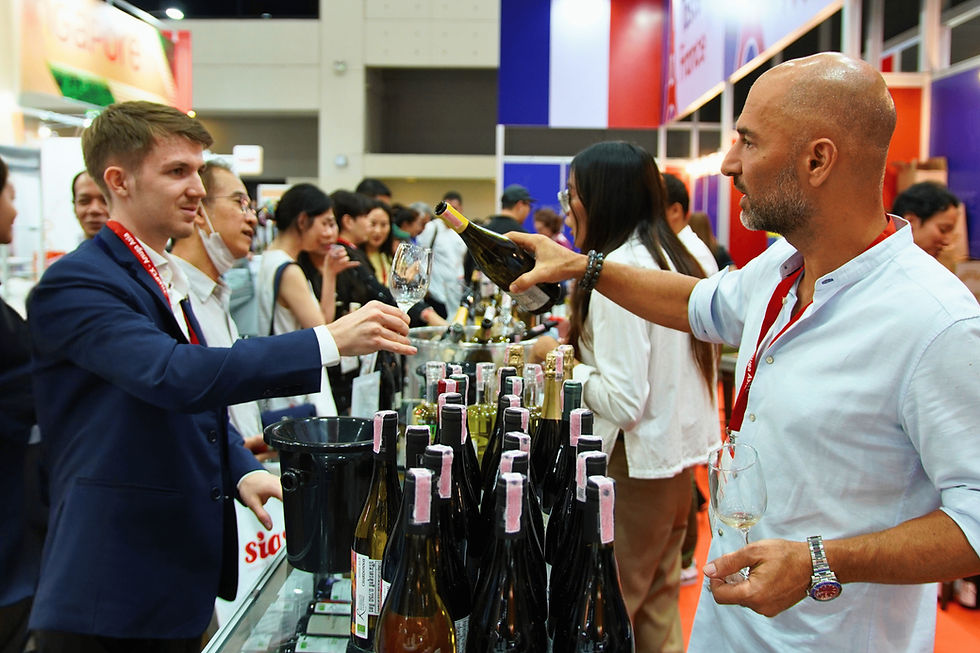
For buyers navigating increasingly fragmented markets, that consolidation carries real practical value. Rather than approaching sourcing through multiple regional events across the year, the structure of THAIFEX – Anuga Asia allows businesses to compress discovery, negotiation, and procurement into a concentrated five-day window. The result is less about spectacle and more about efficiency. Shortlisting becomes faster, cross-category comparisons become easier, and partnerships can move forward without the delays that often come with scattered trade schedules.
One of the most significant additions this year is Hall 4, which emerges as a dedicated focal point for innovation and emerging brands. Bringing together the new New-to-Market Street, the THAIFEX – Anuga Startup showcase, and the tasteInnovation award-winning products exhibition, the hall is designed as a concentrated view of where the industry may be heading next.
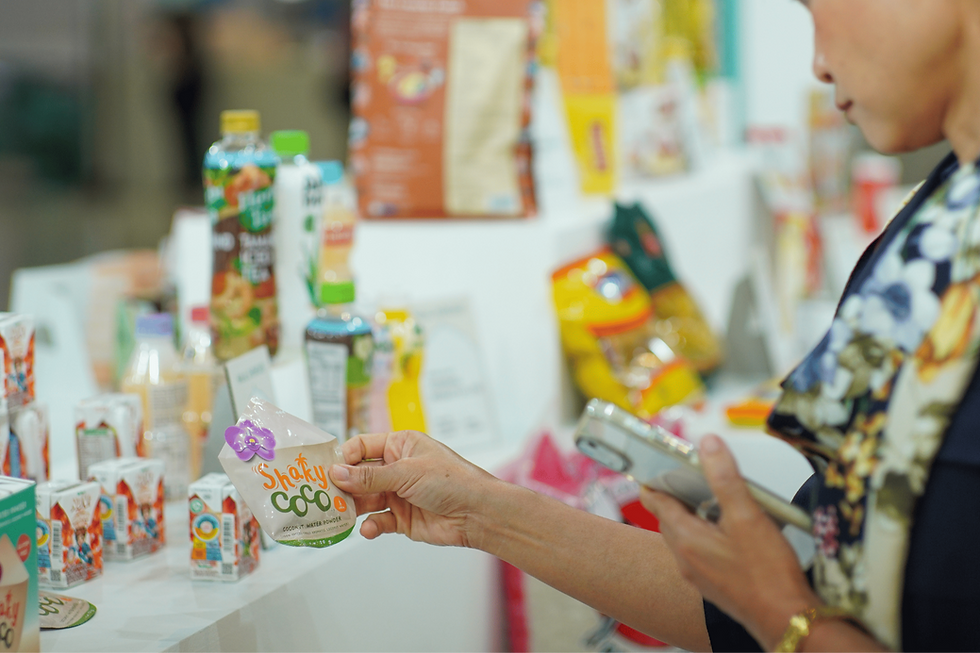
The New-to-Market Street introduces products launched within the past 12 months, many of which are entering Asian markets for the first time. Rather than functioning as a purely conceptual display, the area offers buyers an early look at products that may soon become commercially significant across retail, hospitality, and distribution sectors. Nearby, the THAIFEX – Anuga Startup platform places early-stage ventures directly in front of investors and buyers, allowing emerging businesses to present ideas in real time rather than through static presentations or distant forecasting.
The emphasis on innovation continues through the THAIFEX – Anuga tasteInnovation Show, where award-winning products across categories such as plant-based alternatives, free-from foods, and sustainability-driven concepts are brought together in a curated exhibition. The broader THAIFEX – Anuga Trend Zone, developed in partnership with Innova Market Insights, complements that display with analysis focused on the ten leading consumer trends currently influencing global food and beverage behaviour.

Taken together, these sections reveal how deeply the language of innovation has shifted within the industry. Sustainability is no longer presented as a niche category, while alternative proteins have moved beyond novelty into increasingly competitive commercial territory. The conversation now revolves less around whether these sectors will grow, and more around which companies can scale effectively without sacrificing quality, pricing, or consumer trust.
That shift becomes especially visible within the Future Food Experience+, a conference and showcase programme built around five daily themes that include precision fermentation, alternative proteins, AI in retail, smart food production, and next-generation flavour systems. Featuring speakers from organisations such as Innova Market Insights, Euromonitor, and AFMA, the programme combines panel discussions, live tastings, startup pitching, and investor networking into a format that feels as much about business strategy as culinary evolution.

Alongside the more future-facing discussions, THAIFEX – Anuga Asia continues to retain a strong connection to culinary craft. The Thailand Ultimate Chef Challenge returns for its 12th edition, running throughout the fair in Hall 4 and bringing together more than 400 professional and junior chefs from across Asia. Endorsed by the World Association of Chefs’ Societies (WACS), the competition spans categories including classic Thai cuisine, Asian curry, pasta, next-generation proteins, seafood, carving, and sustainable cooking techniques.

While competitions of this scale naturally carry an element of performance, they also offer a revealing snapshot of how culinary priorities are evolving across the region. Sustainability, ingredient traceability, and adaptability increasingly sit beside flavour and technique as measures of professional excellence. In many ways, the competition reflects the same balancing act facing the broader industry: preserving craftsmanship while responding to changing consumer expectations and operational realities.
The 2026 edition also introduces the European Union as the event’s Official Partner Region, expanding the fair’s international dimension further. The EU Pavilion brings together products from across its Member States, offering Thai and regional buyers direct access to European food and drink producers within the same sourcing environment.

The partnership arrives at a time when Southeast Asian consumers are showing growing interest in provenance, sustainability, and premium positioning, areas where European producers often hold established reputational strength. At the same time, the inclusion of the EU highlights how Asia continues to solidify its position as one of the world’s most strategically important food and beverage markets. Rather than simply exporting into the region, many international brands now approach Asia-Pacific as a central growth engine requiring long-term investment and localised understanding.

Beyond the exhibition halls themselves, THAIFEX – Anuga Asia 2026 also marks the launch of PLX Asia, Southeast Asia’s first dedicated B2B platform focused on private label and contract manufacturing.
Private label has evolved considerably in recent years. Once associated primarily with affordability and supermarket margin strategies, it now occupies a more sophisticated position within retail ecosystems. Across Southeast Asia, retailers are strengthening in-house product lines while manufacturers increasingly seek direct routes to market partnerships. PLX Asia aims to bridge those interests by creating a dedicated environment for retailers and producers to negotiate long-term supply relationships rather than transactional deals.

The platform begins with the PLX Asia Industry Leadership Summit on 29 May 2026, an invite-only programme designed for senior decision-makers, before expanding into a full-scale trade exhibition in 2027 covering food, beauty, and household categories.
What ultimately distinguishes THAIFEX – Anuga Asia 2026 is not simply its size, but the way it captures the current state of the industry with unusual clarity. The event exists at the intersection of commerce, innovation, manufacturing, hospitality, retail, and culinary culture, bringing together sectors that increasingly rely on one another to remain competitive. The pressures shaping the global food and beverage landscape are visible throughout the fair, from the accelerated focus on functional products and sustainability to the growing influence of technology and evolving consumer expectations.

Yet amid those broader shifts, the event still retains something distinctly human at its core. Deals are negotiated face-to-face. Products are tasted in real time. Conversations unfold between producers, chefs, distributors, investors, retailers, and hospitality professionals moving through the same halls with shared urgency and curiosity. In an industry often driven by speed, THAIFEX – Anuga Asia remains one of the rare places where the future of food can be observed not as abstraction, but as something tangible already beginning to take shape.
Credits Article: Wariya Intreyonk Photos: courtesy


Comments