TAAN Bangkok's Harvest Menu Takes Thai Cuisine Beyond Tradition


Thai cuisine is shaped as much by geography and agricultural traditions as by recipes passed down through generations. Across the country, ingredients and cooking methods reflect the communities that developed them, from the fermented, herbaceous preparations of Northern Thailand to the intensely seasoned dishes of the South. At TAAN Bangkok, Executive Chef Monthep 'Thep' Kamolsilp approaches this diversity through Harvest, a 13-course tasting menu that examines traditional Thai flavours from a contemporary perspective. Rather than simply recreating familiar dishes in smaller portions, the kitchen explores their essential characteristics, reconstructing textures, reconsidering ingredients and occasionally turning conventional preparations entirely upside down.
Located on the 25th floor of Siam@Siam Design Hotel Bangkok, TAAN combines panoramic city views with an interior distinguished by dramatic yellow ceiling installations. The restaurant's culinary philosophy emphasises Thai produce, regional food cultures, and relationships with local suppliers. Harvest extends this approach beyond the ingredients, incorporating stories about their origins, the communities behind them, and the culinary traditions that inspired each preparation.

Before the first course arrives, the experience begins with an unexpected water tasting. A beverage specialist introduces five selections of Thai drinking water, each from a different source and with its own mineral composition and flavour profile. Served in glass bottles, guests taste each water individually, much like wine, allowing them to compare subtle differences before choosing one to accompany the meal. It is an interesting exercise in noticing something often overlooked at the dining table, while establishing provenance from the outset.

The opening sequence introduces three interpretations of familiar Thai dishes. Laab Jok combines raw minced Thai Wagyu, seasoned with the characteristic flavours of laab, with a house-made marshmallow pillow and Thai Osietra caviar. The marshmallow is an unexpected foundation for the savoury beef, providing a soft contrast to the minced meat, while the caviar contributes salinity. It is an unusual combination that immediately establishes the kitchen's willingness to move beyond conventional presentations.


Jin Gai takes chicken, lemongrass and turmeric, ingredients associated with Northern Thai cooking, and transforms them into a petite tart. The crisp pastry contrasts with the aromatic filling, concentrating the familiar flavours into a single bite. Laab Tod, meanwhile, replaces the more common minced meat with grouper, forming it into a fried ball coated with toasted rice. Lime adds acidity, while the cucumber cylinder beneath the grouper offers freshness and an additional textural contrast. These opening bites introduce the menu's central idea: the flavours remain recognisably Thai, even as their appearance changes considerably.

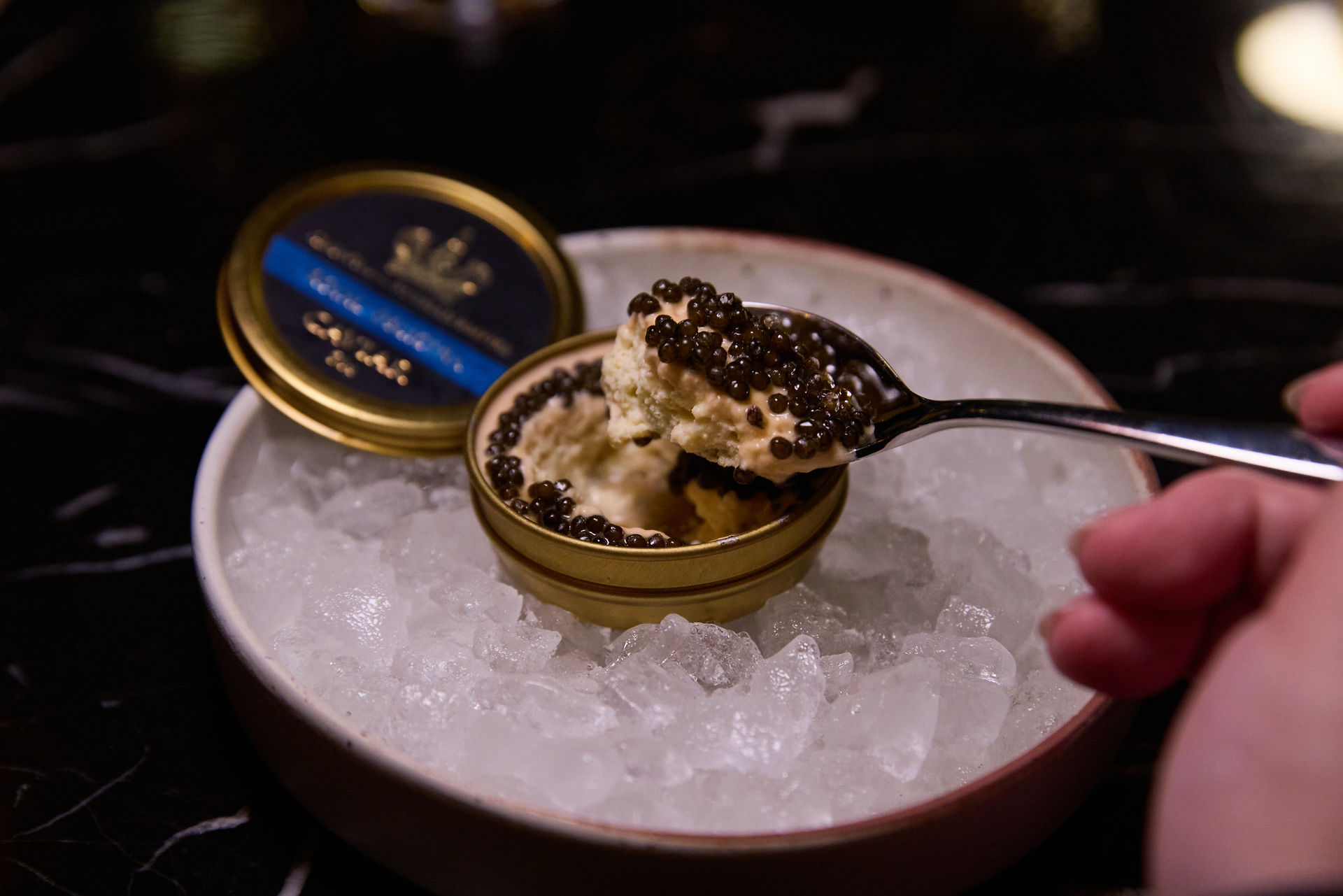
The next course, Lhon, draws inspiration from the traditional coconut-based relish generally served alongside fresh vegetables. At TAAN, the preparation takes the form of a smooth coconut mousse, incorporating cucumber and galangal tomato cream. It is topped with Thai Osietra caviar produced through the Royal Project in Chiang Mai, an ingredient that brings a pronounced savoury character to the otherwise delicate composition. The richness of coconut, freshness of cucumber and aromatic qualities of galangal provide the foundation, while the caviar adds another dimension without completely overwhelming the original inspiration.


Phla offers a more direct interpretation of Thai seafood preparations. The fish is marinated in fish sauce, then combined with lime juice, fresh chillies, mint, coriander leaves, and torch ginger flower, known locally as dok dala. The emphasis remains on the interaction between seafood, herbs and acidity. The torch ginger introduces a distinctive floral fragrance, while the fresh herbs and chillies give the preparation the lively character expected of a Thai phla. Following the creamy richness of Lhon, the dish brings a welcome change of pace.

One of the most intriguing courses arrives as Boat Noodles, inspired by Ayutthaya's long association with the dish. Rather than reproducing the conventional bowl of noodles, meat and dark broth, the kitchen reverses the familiar arrangement. The kitchen carefully cuts grouper into noodle-like pieces, while crispy vermicelli adds crunch. The usual pickled chilli vinegar becomes a delicate foam, and perhaps most unexpectedly, the broth is replaced by a chocolate-based sauce.
The chocolate comes from Yarang in Pattani and undergoes fermentation, developing acidity and nutty characteristics that allow it to work in a savoury preparation. Its role is not to introduce the sweetness normally associated with chocolate desserts; instead, it adds depth and complexity to the sauce. The combination of grouper, crispy vermicelli, vinegar foam and fermented chocolate creates an interpretation that initially seems far removed from boat noodles, yet still reflects the interplay of savoury richness and acidity that defines the original. It effectively shows how a traditional dish can be reconsidered through its components rather than simply its appearance.

Gaeng Mahae follows with a considerably richer character. Mahae, a type of pod bean, is part of a preparation that combines pork cheek, tongue, and belly with shrimp paste and butter. Using several cuts of pork lets the kitchen explore different textures in the same dish, from the tenderness of the cheek to the distinctive consistency of the tongue and the richness of the belly. Rice accompanies the preparation, together with mahae mousse, mint, dill and crispy cha-om. Fresh herbs contrast the concentrated savoury flavours, while crispy cha-om adds texture and keeps the dish from becoming excessively heavy.

The exploration of Northern Thai cuisine continues with Khan Tok. Traditionally, a khan tok is a low, circular dining tray used for communal meals, with several dishes arranged for sharing. TAAN reinterprets this dining tradition as a single composition centred on river prawn, coated in sourdough and panko breadcrumbs, then deep-fried to resemble tempura. The prawn rests on rich Gaeng Hang Le jam, with macadamia purée and several elements inspired by Northern Thai specialities.
Nam Prik Noom becomes a delicate tuile, while Yum Kai Mod Daeng, a salad made with red ant larvae, introduces an unusual regional ingredient alongside Aeb Dak Dae, traditionally prepared with silkworm pupae. The river prawn's crisp coating contrasts with the smooth macadamia purée and the concentrated sweetness and savouriness of the Gaeng Hang Le jam. Rather than simply presenting an assortment of regional dishes, the kitchen brings their distinctive flavours and textures together in a contemporary interpretation of Northern Thailand's communal dining tradition.

Representing Southern Thailand, Pork Belly brings together ingredients closely associated with the region's bold culinary identity. The pork belly is brined in fish sauce before cooking, developing a savoury depth that complements its rich layers of meat and fat. It is accompanied by bitter bean purée, made from sator, the pungent pod bean widely used in Southern Thai cooking, and grilled durian molasses, which introduces a concentrated sweetness and another dimension of the region's distinctive produce. The combination of savoury pork, assertive bitter beans and grilled durian creates an interesting balance, demonstrating how ingredients often considered challenging can find a place in contemporary Thai fine dining.

Beef returns to the table with Charcoal Thai Wagyu. The Thai Wagyu comes from Nong Khai and is cooked over charcoal, served medium-rare. Unlike the heavily marbled Wagyu often associated with luxury dining, this beef is relatively lean, letting its natural flavour remain prominent. The charcoal contributes an additional aromatic quality without overwhelming the meat.

The accompaniments draw inspiration from Tum Bah Noon, a Northern Thai preparation traditionally made with young jackfruit. The jackfruit is worked into a smooth consistency reminiscent of mashed potatoes, alongside beef intestine, kloi, or wild yam, and water bamboo shoots. Using different parts of the animal reflects the kitchen's interest in reducing waste and exploring ingredients beyond conventional premium cuts. The kitchen pours a clarified Northern-style beef broth around the preparation at the table, bringing together the charcoal-grilled meat, young jackfruit, and other regional ingredients. The result shows how contemporary fine dining can incorporate traditional whole-animal approaches without treating them merely as novelty.

Hoh, inspired by the Northern Thai dish Gaeng Hoh, concludes the substantial savoury courses. Traditionally, Gaeng Hoh combines leftover gaeng and other ingredients into a new preparation, often with noodles, vegetables, and herbs. TAAN takes this idea in a different direction, transforming it into something resembling a taco. A thin sticky-rice flatbread forms the base, holding braised lamb neck, potato, crispy vermicelli and fresh herbs.

The lamb is tender and richly flavoured, complemented by a Burmese-style gaeng sauce that brings depth to the preparation. Crispy rice noodles contribute texture, while mint and coriander introduce freshness against the richness of the meat. Although the presentation borrows from the familiar hand-held format of a taco, the flavours remain rooted in Northern Thai cooking and its historical connections with neighbouring culinary traditions. It is a satisfying conclusion to the savoury progression, bringing together comforting ingredients and a playful presentation without losing sight of the original inspiration.

After the lamb, the Palate Cleanser offers a refreshing transition to dessert. Torch ginger shaved ice, mamala jelly and mangosteen cream form a delicate pink composition presented in a deep white bowl. The shaved ice delivers an immediate cooling sensation, while the torch ginger contributes floral aromatics and the mangosteen introduces gentle fruit sweetness and acidity. The different textures, from the fine ice to the soft jelly and cream, create a light preparation that refreshes the palate after the preceding meat courses.

The main dessert, Street Dessert, draws on familiar Thai street sweets with sweet corn, pineapple ice cream, frozen yolk, and taro caramel. Presented on a yellow plate, the dessert brings together a smooth yellow base, small rounded elements, a scoop of ice cream, delicate crumbs and a glossy caramel sauce. Sweet corn provides a familiar sweetness, while the pineapple ice cream introduces a brighter fruit character. The frozen yolk adds another textural dimension, and the taro caramel brings a deeper, more comforting sweetness to the composition. Rather than replicating a particular street dessert in its conventional form, the kitchen draws on recognisable ingredients and textures to create a contemporary interpretation.

The meal concludes with Mignardises, consisting of two petite creations with contrasting characteristics. The first is a white chocolate ball incorporating lemongrass and roasted coconut. The creamy sweetness of the chocolate is complemented by lemongrass's citrusy fragrance and the nuttiness of toasted coconut, bringing together ingredients often found in Thai desserts in a different format.
The second creation offers a lighter finish. Frozen melon is presented on a thin slice of lime, topped with lychee and som sa zest. The sweetness of the melon and lychee is balanced by the aromatic citrus character of som sa, while the frozen texture provides a final refreshing contrast to the preceding chocolate. Together, the two mignardises bring the extensive tasting menu to a pleasantly restrained conclusion.

Beyond the food, TAAN also explores Thai ingredients through its beverage programme. Refined Flavor, presented as a selection of four shots, draws inspiration from Ya Dong, the traditional Thai herbal spirit. The preparation uses more than a dozen medicinal herbs from Chanthaburi, infused over an extended period, then combined with mint, palm sugar, and lime. The resulting selection offers different expressions of the spirit's herbal, aromatic character.

Another cocktail, Sam Pran, combines Thai rum with toddy palm water and bael syrup from Sam Phran in Nakhon Pathom. The toddy palm adds gentle sweetness, while the bael brings a distinctive nutty, aromatic quality. Together, the ingredients create a smooth cocktail that continues the restaurant's emphasis on Thai produce and regional connections.

Throughout Harvest, the kitchen explores ingredients beyond the familiar staples of contemporary Thai fine dining. Fermented chocolate from Pattani, Northern Thai silkworm preparations, red ant larvae, young jackfruit, local caviar and less commonly used cuts of meat all contribute to a broader exploration of Thailand's culinary resources. Their inclusion is especially meaningful when paired with explanations of the dishes and traditions they come from.

Not every reinterpretation relies on dramatic visual transformation. Some courses are defined by the quality of their central ingredients, while others challenge expectations through unusual combinations or changes in texture. This variation sustains interest throughout the lengthy progression, preventing the menu from becoming a succession of elaborate presentations without a clear culinary purpose.

TAAN Bangkok's Harvest menu ultimately presents Thai cuisine as something continually evolving rather than fixed in the past. At this restaurant, regional traditions provide a foundation for experimentation, allowing familiar dishes to take on new forms while preserving the ingredients, flavours and cultural references that give them meaning. It is an approach that respects the country's culinary heritage while demonstrating how much remains to be explored within it.
TAAN Bangkok
Tel: +666 5328 7374
Website: https://www.taanbangkok.com/
Instagram: https://www.instagram.com/taanbangkok/
Facebook: https://www.facebook.com/taanbangkok/
Email: contact@taanbangkok.com
Location: 25th Floor, Siam@Siam Design Hotel Bangkok, 865 Rama I Road, Wang Mai, Pathum Wan, Bangkok 10330, Thailand
Credits
Article: Wariya Intreyonk
Photos: Wariya Intreyonk and Chalad Chareonphongpak


Comments