The Convergence of Issan and Japanese Cuisines at Sato San Bangkok

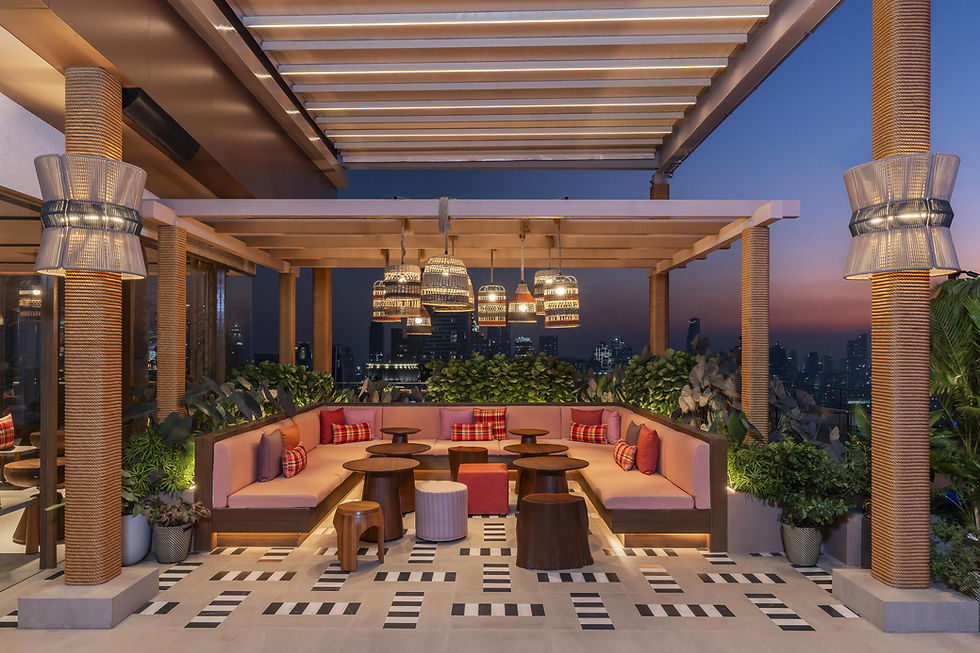
There is a fine line between fusion and confusion. Too often, restaurants attempting to bridge two culinary traditions end up flattening both, relying on gimmickry rather than understanding. Sato San Rooftop Bar Bangkok, however, approaches the meeting of Isaan and Japanese cuisines with considerably more care. Rather than forcing together two disparate food cultures for novelty's sake, the restaurant looks at the quiet affinities between them: the fondness for smoke and char, the use of fermentation, the balance between acidity, spice and umami, and the importance of texture in every bite.

The menu is built around recognisable Thai and Japanese references, yet rarely leaves them untouched. Familiar dishes are nudged in another direction with soy-miso glazes, yuzu kosho, toasted rice powder, nam jim jaew, and fish sauce. There is enough restraint to keep the food grounded, though enough confidence to ensure it never feels predictable.

The Crispy Salt & Pepper Tofu is one of the more straightforward dishes on the menu, but also one of the most effective. The tofu arrives with a delicate crust that shatters easily under the teeth, revealing a soft, almost custard-like centre. A spicy tamarind sauce runs alongside, adding a sweet-sour sharpness that cuts through the richness of the fried exterior. It is a simple dish, but one that works because every component understands its role.

From there, the Crispy Tuna Sushi moves into more playful territory. Akami tuna is layered over crisp rice, while a burnt lime chilli mayo adds both smokiness and a gentle heat. The contrast between cool tuna and warm, crackling rice is satisfying in itself, though the citrus note from the burnt lime keeps the dish from becoming too heavy. It takes a format that has become ubiquitous across modern Asian restaurants and gives it just enough character to feel worth ordering.

The Spicy Tuna Larb Tartare is perhaps the clearest expression of the restaurant's core idea. Cubes of tuna are dressed with lime, chilli, fish sauce and herbs, then layered over avocado and served alongside crisp crackers. The toasted rice powder, so integral to Isaan cooking, brings nuttiness and a subtle grainy texture, while the tuna retains the clean, delicate quality expected of Japanese sashimi. The avocado softens the dressing's sharper edges, making the dish feel richer and more rounded without dulling its acidity or spice. It feels like a conversation between two cuisines rather than one overwhelming the other.

Tiger Prawn, glazed in soy miso and paired with chilli pickle, continues that balancing act between sweetness, salinity and spice. The prawns remain plump and firm, while the soy miso glaze lends a caramelised depth that works particularly well against the sharpness of the pickled chilli. It is rich without becoming cloying, and fiery without overpowering the seafood itself.

The Beef Satay arrives with a Thai basil dip rather than the expected peanut sauce, a small but clever shift that makes the dish feel lighter and fresher. The beef is grilled until lightly charred at the edges, with enough smokiness to echo Japanese robata cooking, while the basil dip adds aromatic brightness that lingers long after the meat is gone.

The Fried Pork Ribs Thai Style lean more unapologetically towards Thai flavours. They are sticky, savoury and deeply satisfying, with pickled chilli and ginger bringing relief from the richness of the pork. Toasted peanuts scattered next to the dish add another layer of crunch and nuttiness. It is the sort of dish that encourages fingers over cutlery and another drink before the plate is fully cleared.

The Grilled Striploin is the menu's most substantial dish and perhaps its most ambitious. Grass-fed Australian beef is seasoned with togarashi rub and served with yuzu kosho, nam jim jaew, cured egg yolk, yuzu and ginger pickle, and rice popper. On paper, it sounds crowded. On the plate, it comes together more successfully than expected. The beef itself is cooked with enough confidence to remain the focal point, while the accompaniments allow diners to move between Japanese heat, Thai acidity and bursts of crunch. The cured egg yolk adds richness, while the nam jim jaew gives the dish a familiar Thai backbone.

Dessert comes in the form of Apple Make A Wish, though the presentation is far more playful than the name suggests. Three bright red apple-shaped morsels arrive perched on dark chocolate crumble, each one glossy and almost too polished to disturb. The glossy apple exterior is made from white chocolate, encasing apple mousse and raspberry purée within. Together, they bring sweetness, tartness and creaminess in a way that feels surprisingly light.

The drinks list follows a similar line of thinking, drawing equally from Thai and Japanese flavours without becoming overly thematic. House signatures, such as Kyoto Sato aka KS, combine gin and mezcal with watermelon, pineapple, pink peppercorn, and Thai basil. At the same time, Sake & Longan leans softer and more floral through sake, gin and longan elderflower cordial. The Sato Highball feels particularly suited to the food, with whisky, shiso, chrysanthemum jasmine and honey cordial giving it enough lift and fragrance to cut through charred meat and spice.

Elsewhere, the more playful Thai and Japanese-inspired cocktails take familiar references and push them slightly further. Mango Sticky Rice turns the classic dessert into a cocktail with tequila, coriander and chilli sitting against mango and sticky rice syrup. At the same time, Isan Colada brings together rum, passionfruit, yuzu, galangal and kaffir lime in a brighter, sharper take on the tropical standard. Rise & Shine Tokyo, meanwhile, sits somewhere between a coffee cocktail and a dessert, blending whisky, brandy, coconut syrup, almond milk, and espresso.

Sato San Rooftop Bar's greatest strength lies in its willingness to let both cuisines retain their identities. Rather than turning Isaan and Japanese cooking into caricatures of either, the restaurant seeks common ground between the two. The result is not always subtle, but it is thoughtful, well-executed and, more importantly, enjoyable. In a city where fusion can sometimes feel like shorthand for excess, Sato San Rooftop Bar offers something far more convincing. Sato San Rooftop Bar
Hours: Daily, 11:00 - 22:00
Tel: +662 209 5999
Website: https://www.satosanrooftopbar.com/
Instagram: https://www.instagram.com/satosan.bkk/
Facebook: https://www.facebook.com/satosanbkk/
Location: 32 Fl, Moxy Bangkok Ratchaprasong, 111 Ratchadamri Rd, Lumphini
Pathumwan, Bangkok, Thailand 10330
Credits
Article: Wariya Intreyonk
Photos: courtesy


Comments